
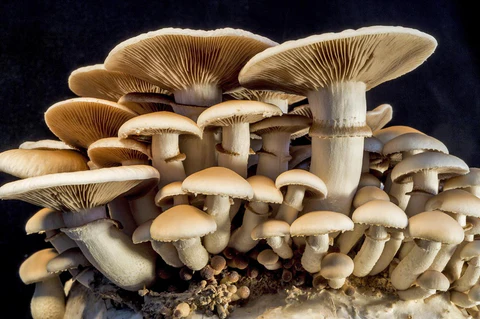
The Fungal Renaissance: Why Mushrooms Deserve the Spotlight
They are not plants, yet they grow from the earth. They are closer relatives to animals, yet they thrive on decay. They exist in a world perpetually draped in shadow, yet they shine brightest in our kitchens and emerging health trends.
We are, officially, in the middle of a Fungal Renaissance.
For centuries, mushrooms were viewed with suspicion—the mysterious, sometimes poisonous, dwellers of the dark forest floor. Today, however, we are finally realizing that these humble, often bizarre organisms are ecological powerhouses, culinary superstars, and vital sources of medicine.
If you thought a mushroom was just a soggy slice on your pizza, prepare to look deeper. Welcome to the captivating kingdom of Fungi.
- The Culinary Powerhouse: Exploring Umami and Texture
For the home cook, the magic of the mushroom begins in the sauté pan. Mushrooms are one of the few natural sources of umami, the savory, fifth taste sensation that gives depth and mouthfeel to food.
But beyond the basic White Button mushroom (which is fine, but predictable), the fungal world offers an unbelievable array of textures and flavors:
Shiitake: Robust, smoky, and meaty. Essential in Asian cooking.
Oyster: Delicate texture and subtle, earthy flavor. Fantastic when lightly fried.
Portobello: The vegetarian staple, often grilled or stuffed due to its large cap and satisfying, dense texture.
Enoki: Tiny, crisp, and slightly fruity, often used raw in salads or added to broths at the last minute.
When you cook mushrooms, you are doing more than just heating them up; you are caramelizing their natural sugars and concentrating their umami compounds. This process unlocks a depth of flavor that is impossible to replicate with vegetables alone.
- The Medicinal Marvels: Adaptogens and Nootropics
Perhaps the most significant shift in modern mushroom appreciation is the realization of their potent medicinal properties. Long used in traditional Chinese medicine, certain fungi are now hitting mainstream supplement shelves, classified often as functional mushrooms.
These aren’t hallucinogens (though that is an entirely different fascinating field of study); these are adaptogens and immune modulators designed to support overall wellness.
Here are three stars of the medicinal mushroom world:
Lion’s Mane (Hericium erinaceus)
This beautiful fungus, resembling a shaggy white pom-pom, has captivated the wellness community for its potential as a nootropic (a substance that enhances cognitive function). Studies suggest Lion’s Mane may help stimulate nerve growth factor (NGF), potentially supporting focus, memory, and nerve health.
Reishi (Ganoderma lucidum)
Often called the “Mushroom of Immortality,” Reishi is primarily known as an adaptogen. It helps the body manage stress, promotes balance, and can support restful sleep. Because its texture is too tough for standard cooking, it is typically consumed in teas, tinctures, or powdered extracts.
Turkey Tail (Trametes versicolor)
Looking like a beautiful array of colorful, velvety fans, Turkey Tail is a powerhouse for immune support. It contains powerful compounds (polysaccharopeptides) that are widely studied for their ability to modulate the immune system and support gut health.
- The Ecological Engine: The Wood Wide Web
To truly appreciate fungi, we must look away from the culinary and medicinal applications and focus on their true, silent work beneath our feet.
The visible mushroom is merely the fruiting body—the “apple” of the organism. The actual being is a vast, invisible network of thread-like filaments called mycelium. This sprawling, underground web is the earth’s original internet.
Mycelium plays several critical ecological roles:
The Great Recyclers: Fungi are the planet’s primary decomposers. They break down tough organic matter (like fallen trees and dead leaves) that plants and animals cannot digest, returning vital nutrients to the soil. Without them, the planet would be buried under debris.
The “Wood Wide Web”: Mycelial networks often connect the roots of different plants and trees, acting as a communication and nutrient exchange highway. A mother tree might send sugars to a struggling sapling through this network, demonstrating a complex, cooperative intelligence in the forest.
This network is what sustains the life above ground. When you walk through a forest, you are constantly supported by this invisible, ancient web of life.
Embracing the Mystery
Whether you are enjoying the richness of a sautéed Portobello steak, mixing Lion’s Mane into your morning coffee for better focus, or simply marveling at a delicate cluster of shelf fungi on a log, the mushroom continues to remind us that life’s most powerful forces often operate just out of sight.
The next time you encounter a mushroom—in the woods, the store, or your supplement cabinet—take a moment to appreciate this creature from its own unique kingdom. It’s not a veggie, it’s not a meat, it’s a fundamental part of life on Earth.
Are you ready to embrace the Fungal Renaissance? Try adding a new variety to your next meal!